“The problem, sir, is difference. If we were all the same, had the same apartments, wore the same clothes, earned the same money, and everything was guaranteed, we would be good. Difference is evil.” This is from Liza, who lit up my phone with a rant about how I am an old white boomer who won’t admit his innate and generational evil. Save your breath, Liza. I am evil. Let’s list my adjectives again: White, Anglo-Saxon, and Protestant 😱 WASP! Privileged because my Dad busted his ass and raised four kids on a union engineer’s salary. Old–my 67th birthday was this month. Let’s not forget that I am a convicted wife-beater. Last but not least, I voted for Trump.
Guys Rule
First it was the claim that women needed to be more like men. Then men were accused of being… men and asked to be more feminine. The latest claim is that we can be whatever gender suits our fancy as long as it is feminine. The side effects of transitioning are brutal. “ALAN! THAT IS THE MOST EVIL THING YOU CAN SAY! TRANSITIONING IS A BEAUTIFUL CONFIRMATION OF SOMEONE’S TRUE GENDER!!!” You are wrong, Liza. Men and women were created to be a complementary pair. Each has gifts that support the other. Trying to create a single gender we treat the same has not gone well.
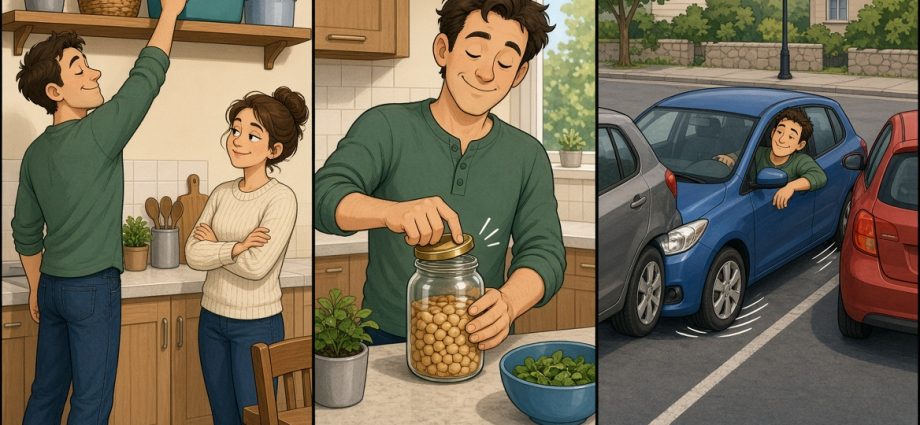
Men lean into working with systems and things. Upper-body strength runs stronger; opening a jar is usually not a negotiation. Emotional range stays narrower and slower on average. Women run smaller in stature and muscle mass, pick up on tone and relationship shifts faster, and more often orient toward people rather than mechanisms. The differences are averages with overlap, not costumes, and they still sort people into different default tasks even when no one is required to follow the old script.
God Made Us Different
BUT ALAN, THAT’S NOT FAIR! replies Liza. I’m not God. I didn’t make this life or this world. It can be a shit show. It’s not the glory hole you find yourself in; it’s what you do about it. And offloading our agency to Uncle Sam hasn’t gone as planned. We didn’t get more fair, we got less.
Eastern Europe tried the experiment of guaranteeing everyone the same outcome—constitutions that declared the sexes equal, women pushed into the same jobs and schools as men, wages compressed, childcare promised so nobody had to carry the old load. Female employment and schooling went up. The housework didn’t move. Women still did most of it. The higher posts stayed mostly male. When the state wanted more babies, it brought the restrictions back and handed out medals for motherhood. A new set of people with party cards ended up with the better apartments and the shorter lines. They ran the flattening for decades under orders and still didn’t get identical people or identical results. Men still leaned toward systems and things and opened the jars. Women still ran smaller and caught the emotional shifts faster. The differences didn’t file for unemployment just because a committee said they should.
“The people will own the means of production.” Yeah, ok. The zealots make glittering promises about the utopia they will build once the revolution is victorious. Only five socialist or communist countries survive—China, Vietnam, Laos, Cuba, and North Korea. All five have had to dial back collectivism to allow some capitalism and survive. The more brutal the attempt at flattening, the worse the consequences.
Difference is Strength
The first complementary pair was Adam and Eve. Side note: the highest divorce rate is among lesbians. “We should all be more feminine.” Yeah… uhm… no. Those two became many. The circles are husband and wife, the family, and the village. Each of us has gifts. Our gifts contribute to the whole.
1 Cor 12:12-30 For just as the body is one and has many members, and all the members of the body, though many, are one body, so it is with Christ. 13 For in one Spirit we were all baptized into one body—Jews or Greeks, slaves[d] or free—and all were made to drink of one Spirit.
14 For the body does not consist of one member but of many. 15 If the foot should say, “Because I am not a hand, I do not belong to the body,” that would not make it any less a part of the body. 16 And if the ear should say, “Because I am not an eye, I do not belong to the body,” that would not make it any less a part of the body. 17 If the whole body were an eye, where would be the sense of hearing? If the whole body were an ear, where would be the sense of smell? 18 But as it is, God arranged the members in the body, each one of them, as he chose. 19 If all were a single member, where would the body be? 20 As it is, there are many parts,[e] yet one body.
21 The eye cannot say to the hand, “I have no need of you,” nor again the head to the feet, “I have no need of you.” 22 On the contrary, the parts of the body that seem to be weaker are indispensable, 23 and on those parts of the body that we think less honorable we bestow the greater honor, and our unpresentable parts are treated with greater modesty, 24 which our more presentable parts do not require. But God has so composed the body, giving greater honor to the part that lacked it, 25 that there may be no division in the body, but that the members may have the same care for one another. 26 If one member suffers, all suffer together; if one member is honored, all rejoice together.
27 Now you are the body of Christ and individually members of it. 28 And God has appointed in the church first apostles, second prophets, third teachers, then miracles, then gifts of healing, helping, administrating, and various kinds of tongues. 29 Are all apostles? Are all prophets? Are all teachers? Do all work miracles? 30 Do all possess gifts of healing? Do all speak with tongues? Do all interpret? 31 But earnestly desire the higher gifts.
Liza, “Everybody should weave baskets, nothing else.” Ok. Who will grow the reeds, harvest them, and prepare them for weaving? What if the farmer, the harvester, or the preparer gets sick? Who will treat them? Who decides what the baskets are worth? Liza looks at me with a pained look and finds her flat white incredibly interesting. She takes a sip, “Don’t ask me stupid questions. Also… I’m short on my rent this month.”
Interdependence
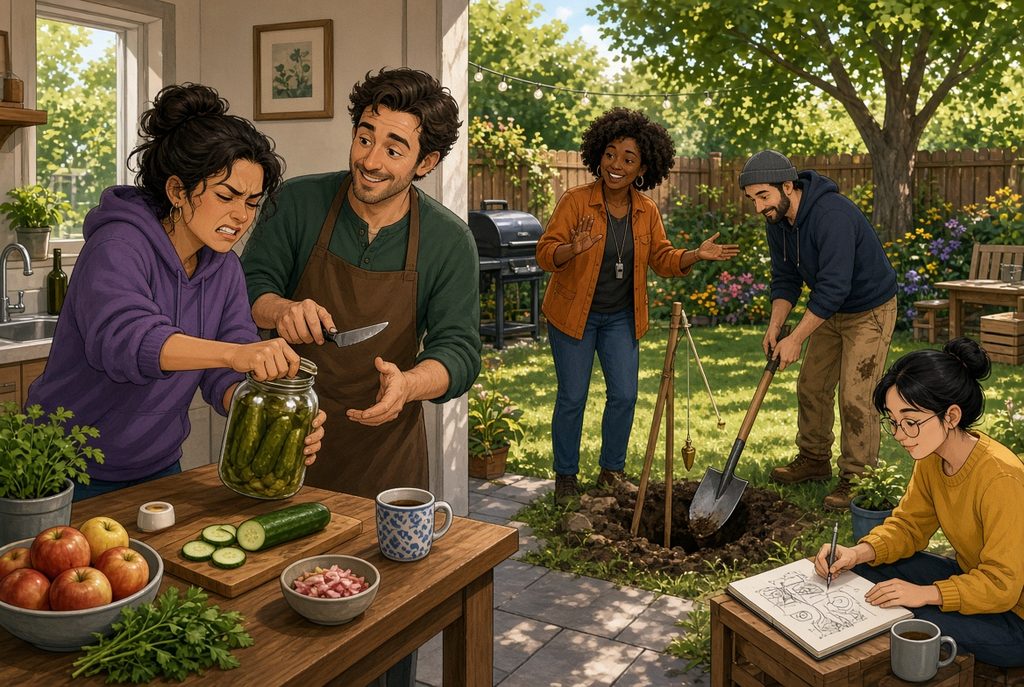
It’s a deeply feminine demand. That she needs to be taken care of. If we all can choose whatever gender identity suits our whim as long as it is feminine, then by inference we all need to be taken care of. By whom, though? Right. The People who own the means of production. See above where the Eastern European endeavor to flatten everything, make everyone the same, failed. If we are all feminine, who will open pickle jars? Pickle jars get opened by whomever is around. If she can’t open it, then does she know that banging the edge of a dinner knife against the edge of the lid makes it easier? She does? Cool.
Difference is evil? No. Difference is strength. We need everybody. The one adept at coordination is as important as the guy who can dig a hole to specification with a shovel and a plumb bob. The bureaucrat advising City Council on ditch digging best practices has a role. One more: the foreman who chooses the team who will survey the land and dig the ditch? Right. The workers will decide. And if they can’t agree? The dreamer who designs the thing needing a hole is the incubus that creates the need for a ditch.
Liza’s gift is brokering. She may be a little short on the rent this month. Likely it’s because she’s working some deals that haven’t paid off. “Yeah, but I don’t have anybody taking care of me since Vexton passed,” Liza tells me. Somehow, that’s my problem.